

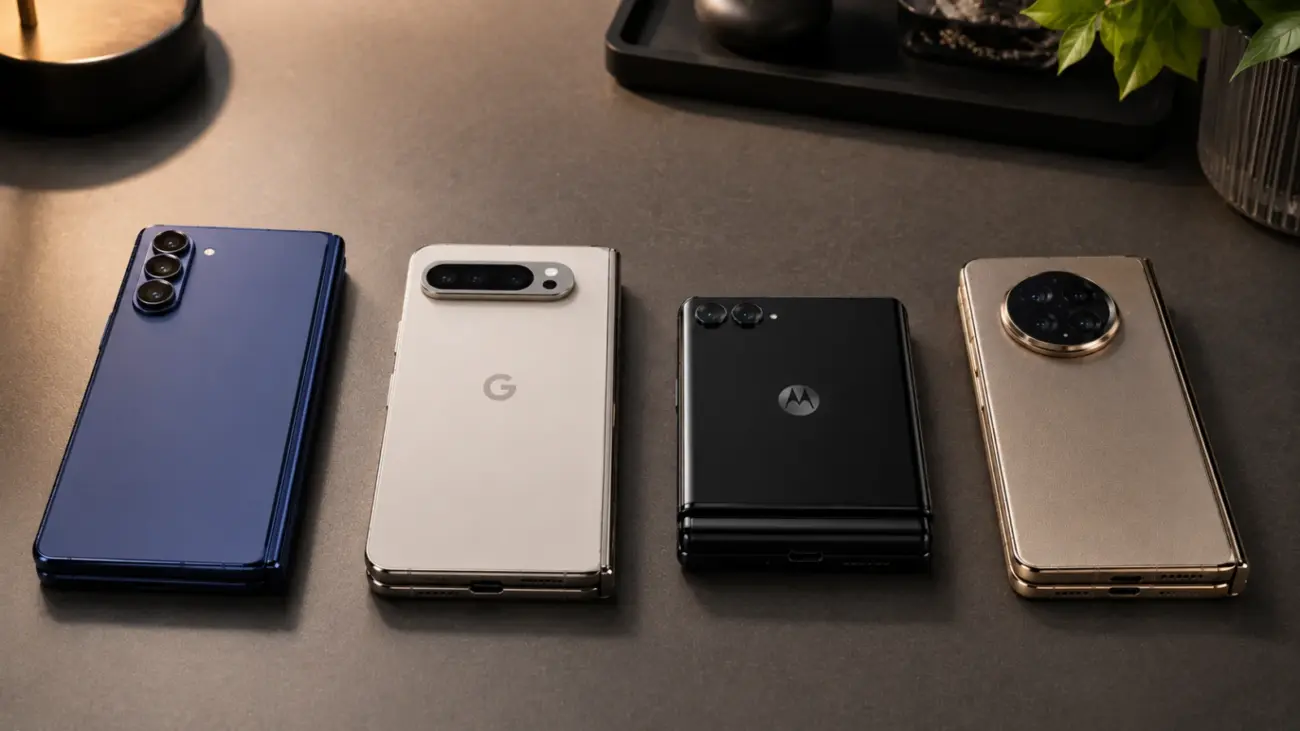
The best foldable phones in 2026 are no longer a compromise. They are genuinely better than most slab flagships in ways that actually matter for daily use, and the gap in durability, battery, and camera quality that once made them easy to dismiss has largely closed. What has not changed is the price, and with four serious contenders now sitting between $1,799 and $1,999 in the US market alone, picking the right one requires more than a specs comparison. I have spent time with each of these devices and followed every verified announcement closely, and this guide cuts through the marketing to tell you exactly which foldable is worth your money in 2026.
The field right now is led by the Samsung Galaxy Z Fold 7, the Google Pixel 10 Pro Fold, the newly launched Motorola Razr Fold, and the Honor Magic V5. Each one wins in a different category, and the right pick depends entirely on what you care about most.
Table of Contents
Quick Comparison: Best Foldable Phones in 2026
| Phone | Price (US) | Chip | Inner Display | Battery | IP Rating | Best For |
|---|---|---|---|---|---|---|
| Samsung Galaxy Z Fold 7 | From $1,999 | Snapdragon 8 Elite for Galaxy | 8.0-inch, 2,600 nits | 4,400 mAh, 25W | IP48 | App ecosystem and camera |
| Google Pixel 10 Pro Fold | From $1,799 | Google Tensor G5 | 8.0-inch, 3,000 nits | 5,015 mAh, 30W | IP68 | Durability and AI features |
| Motorola Razr Fold | From $1,899 | Snapdragon 8 Gen 5 | 8.1-inch, 6,200 nits | 6,000 mAh, 80W | IP48 | Battery life and charging |
| Honor Magic V5 | From ~$1,246 (global) | Snapdragon 8 Elite | 7.95-inch, 5,000 nits | 5,820 mAh (6,100 on 1TB), 66W | IP58/IP59 | Thinness and value |
1. Samsung Galaxy Z Fold 7: Best Overall Foldable in 2026
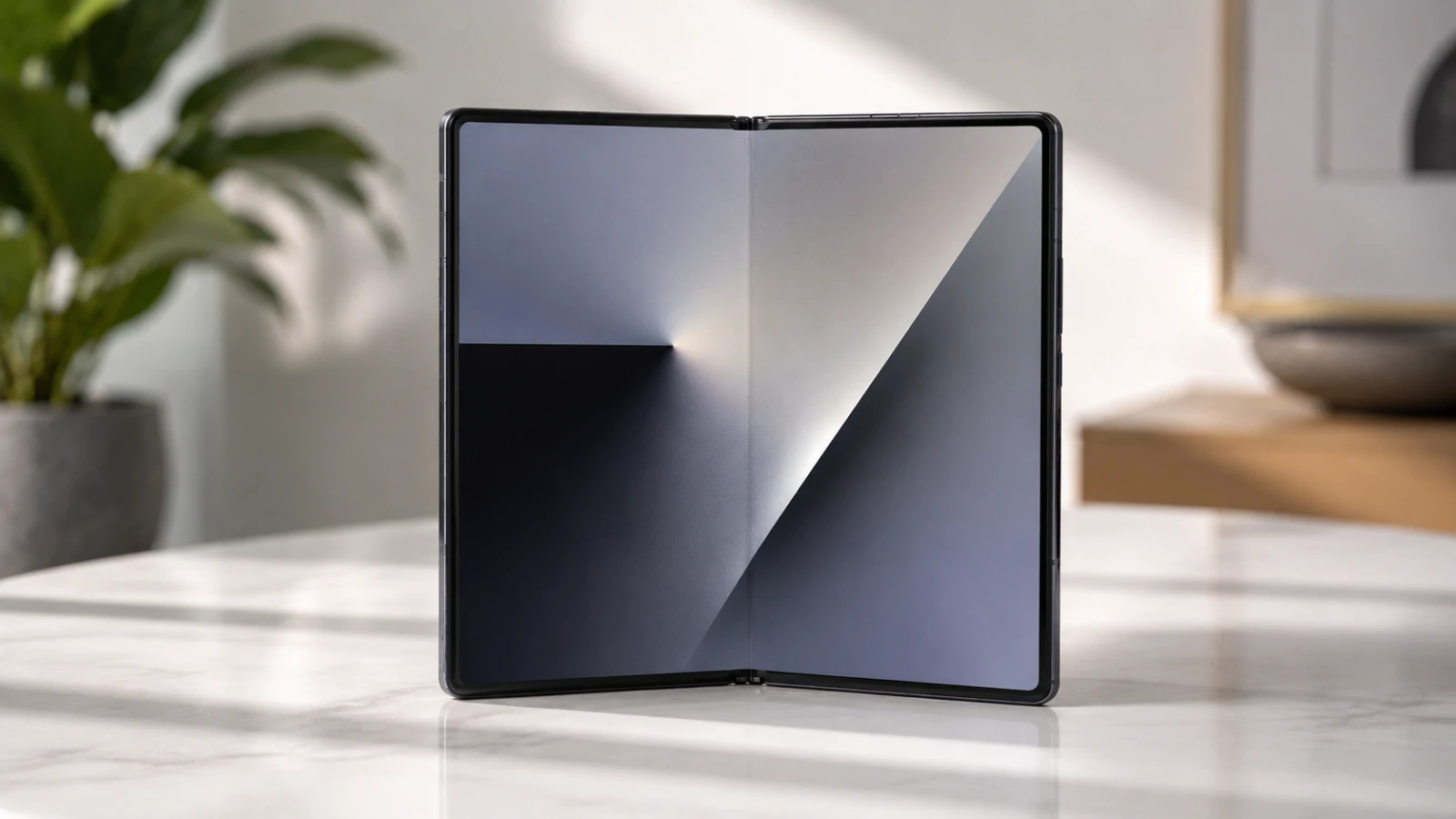
Samsung released the Galaxy Z Fold 7 on July 25, 2025, at a starting price of $1,999 for the 256GB model, a $100 increase over the Z Fold 6. That price bump is easier to justify once you see what Samsung actually changed this time around, because after years of incremental updates, the Z Fold 7 delivers real, measurable improvements across design, camera, and software.
The most immediate upgrade is the design. The Z Fold 7 folds down to just 8.9mm thick and unfolds to an almost unbelievably thin 4.2mm, lighter than the Galaxy S25 Ultra at 215 grams. The cover screen now uses a 21:9 aspect ratio, which finally makes it feel like a real smartphone instead of a narrow strip of glass. Inside, the 8-inch Dynamic AMOLED 2x panel pushes up to 2,600 nits, with a new multi-rail hinge structure that Samsung says reduces the visible crease while strengthening durability. In real-world use, the crease fades fast, far faster than on older Z Fold models.
The biggest hardware leap is the camera. Samsung moved the 200MP main sensor from the S25 Ultra directly into the Z Fold 7, pairing it with a 12MP ultrawide and 10MP 3x telephoto. This is the first time a foldable phone has carried a 200MP main shooter, and the results are genuinely strong. Video support goes up to 8K, and the AI-powered ProVisual Engine handles subject separation and low-light detail processing on-device. Galaxy AI, running on the Snapdragon 8 Elite for Galaxy chip with 12GB of RAM, handles everything from live translation to on-screen content summarization through Gemini integration.
Software is where Samsung still leads the entire category. One UI 8 on Android 16 with up to seven major OS updates means the Z Fold 7 will stay current well into the next decade. The multitasking system supports up to four resizable windows simultaneously, and Samsung DeX mode lets you connect the phone to a monitor with a keyboard and mouse for a near-laptop experience. For productivity-focused buyers, there is nothing else in this list that matches the Z Fold 7’s software depth.
The honest caveats: Samsung dropped S Pen support entirely this year by removing the digitizer layer from the inner display, which will frustrate anyone who used the S Pen on previous Fold models. The IP48 rating still excludes dust protection, the 4,400mAh battery is the smallest on this list, and 25W wired charging is slow by 2026 standards. If battery life is your top priority, keep reading.
Pros and Cons
- Pros: 200MP main camera from S25 Ultra, thinnest and lightest Samsung foldable ever, best-in-class app ecosystem and multitasking software, 7 OS updates guaranteed, Snapdragon 8 Elite for Galaxy chip delivers top benchmark scores
- Cons: $1,999 starting price is the highest on this list, S Pen support dropped, 4,400mAh battery is small for the price, 25W charging is slow, no dust protection at IP48
2. Google Pixel 10 Pro Fold: Best for Durability and Computational Photography

Google launched the Pixel 10 Pro Fold on October 9, 2025, at $1,799, holding the same price as its predecessor. For buyers who want a foldable they can take anywhere without worry, the Pixel 10 Pro Fold does something no other foldable had managed before its release: it carries a full IP68 dust and water resistance rating, matching the standard of non-folding flagships like the iPhone 17 Pro and Galaxy S26 Ultra.
That IP68 rating came from a complete hinge redesign. Google built a gearless hinge that is not only thinner than the previous generation but also seals out dust in a way the old design could not. At 5.2mm unfolded and 258 grams, the Pixel 10 Pro Fold is heavier than the Z Fold 7, but most users in my experience care far more about durability than marginal weight differences. The 8-inch inner display pushes up to 3,000 nits peak brightness, which is the highest of any foldable in this guide, making it the best option for outdoor use.
Where the Pixel wins decisively is computational photography and long-term software value. The primary 48MP camera, combined with a 10.5MP ultrawide and 10.8MP 5x telephoto with 20x Super Res Zoom, handles real-world scenes with the same Pixel processing pipeline that consistently beats Snapdragon-powered phones on shots involving complex lighting, skin tones, and night scenes. Magic Eraser, Best Take, and the new Magic Cue AI feature all run on-device through the Tensor G5 chip. Seven years of OS and security updates match Samsung’s commitment, and Android 16 out of the box with Material 3 Expressive UI makes the software experience feel polished and cohesive.
The real weakness here is raw processing power. The Tensor G5, built on TSMC’s 3nm N3E process, is more efficient than previous Tensor chips but meaningfully slower than the Snapdragon 8 Elite in heavy workloads and gaming. The 5,015mAh battery is solid, but 30W wired charging is still behind the competition, and 15W wireless charging is average. US-only availability for official warranty support also limits the Pixel 10 Pro Fold’s appeal for international buyers, especially in Asia.
Pros and Cons
- Pros: First foldable with IP68 dust and water resistance, best computational photography in the category, 3,000 nits peak brightness on inner display, 5,015mAh battery, gearless hinge is a genuine engineering leap, 7 OS updates, $1,799 starting price is the most accessible on this list
- Cons: Tensor G5 is slower than Snapdragon 8 Elite in benchmarks, 30W charging is not fast by 2026 standards, US availability only for official support, 258g is the heaviest on this list
3. Motorola Razr Fold: The Best Battery Life in Any Foldable
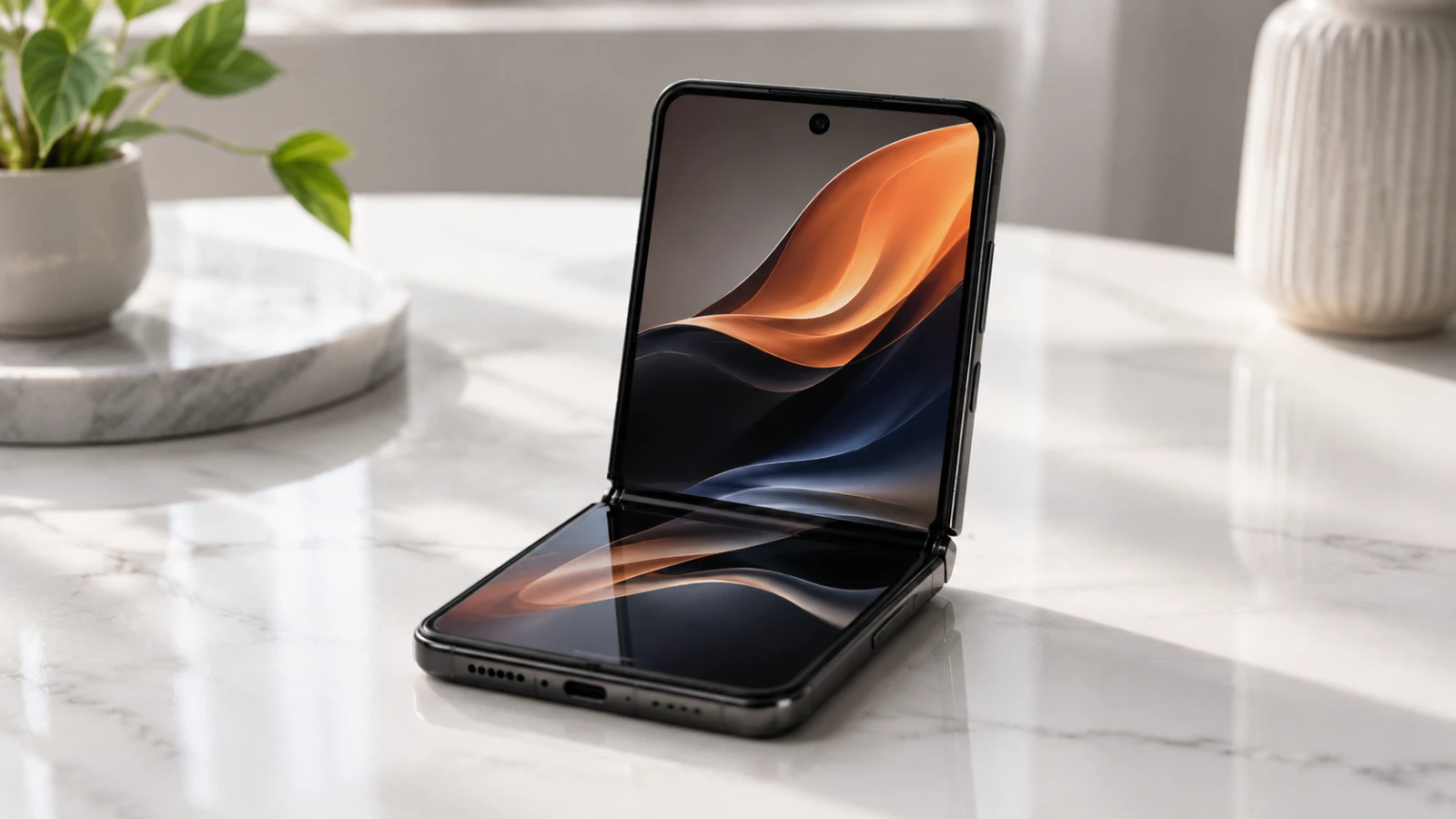
Motorola stepped into the book-style foldable market for the first time at MWC 2026 in March, and the Razr Fold launched for sale in the US on May 21, 2026, at $1,899. It immediately made headlines for two things: a 6,000mAh silicon-carbon battery, which is the largest battery fitted in any foldable phone currently on the market, and a DXOMARK Gold certification for its triple-camera system, the first foldable to earn that designation.
Motorola packed an 8.1-inch inner display with 6,200 nits peak brightness, a figure that is hard to verify in daily use but certainly produces a very bright panel, and a 6.6-inch 165Hz cover screen, both with Gorilla Glass Ceramic 3. The camera system uses three 50MP Sony LYT-828 sensors covering main, ultrawide, and 3x telephoto, with 8K video recording at 30fps and 4K at 120fps. Motorola’s Moto Pen Ultra stylus, available separately for $99, is compatible with both screens, filling the gap Samsung left when it dropped S Pen support from the Z Fold 7.
The 6,000mAh battery with 80W TurboPower wired charging is the single most practical advantage this phone has over the competition. Motorola claims up to 43 hours of use on a single charge, and the 80W charging speed recovers hours of battery in under 10 minutes. In a category where every other premium option either has a smaller battery or slower charging, this is a meaningful real-world differentiator, especially for users who travel or work long days without reliable access to power.
The chip is a Snapdragon 8 Gen 5, not the Snapdragon 8 Elite found in the Z Fold 7 and Honor Magic V5, which places it slightly behind in peak performance benchmarks. The software experience sits between Pixel and Samsung in terms of foldable optimization, and as a first-generation book-style device, the Razr Fold has less app scaling polish than Samsung’s six-generation head start. For most users this will not be noticeable day-to-day, but productivity power users may feel the gap in niche apps.
Pros and Cons
- Pros: 6,000mAh battery with 80W charging is best-in-class, DXOMARK Gold camera certification, compatible with Moto Pen Ultra stylus, 8.1-inch inner display is the largest on this list, 7 OS updates, $1,899 sits between Pixel and Samsung in price
- Cons: Snapdragon 8 Gen 5 falls behind Snapdragon 8 Elite rivals in benchmarks, first-generation book-fold means less software maturity than Samsung, IP48 has no dust resistance, heavier than the Z Fold 7 at 243g
4. Honor Magic V5: Thinnest Foldable with the Best Value
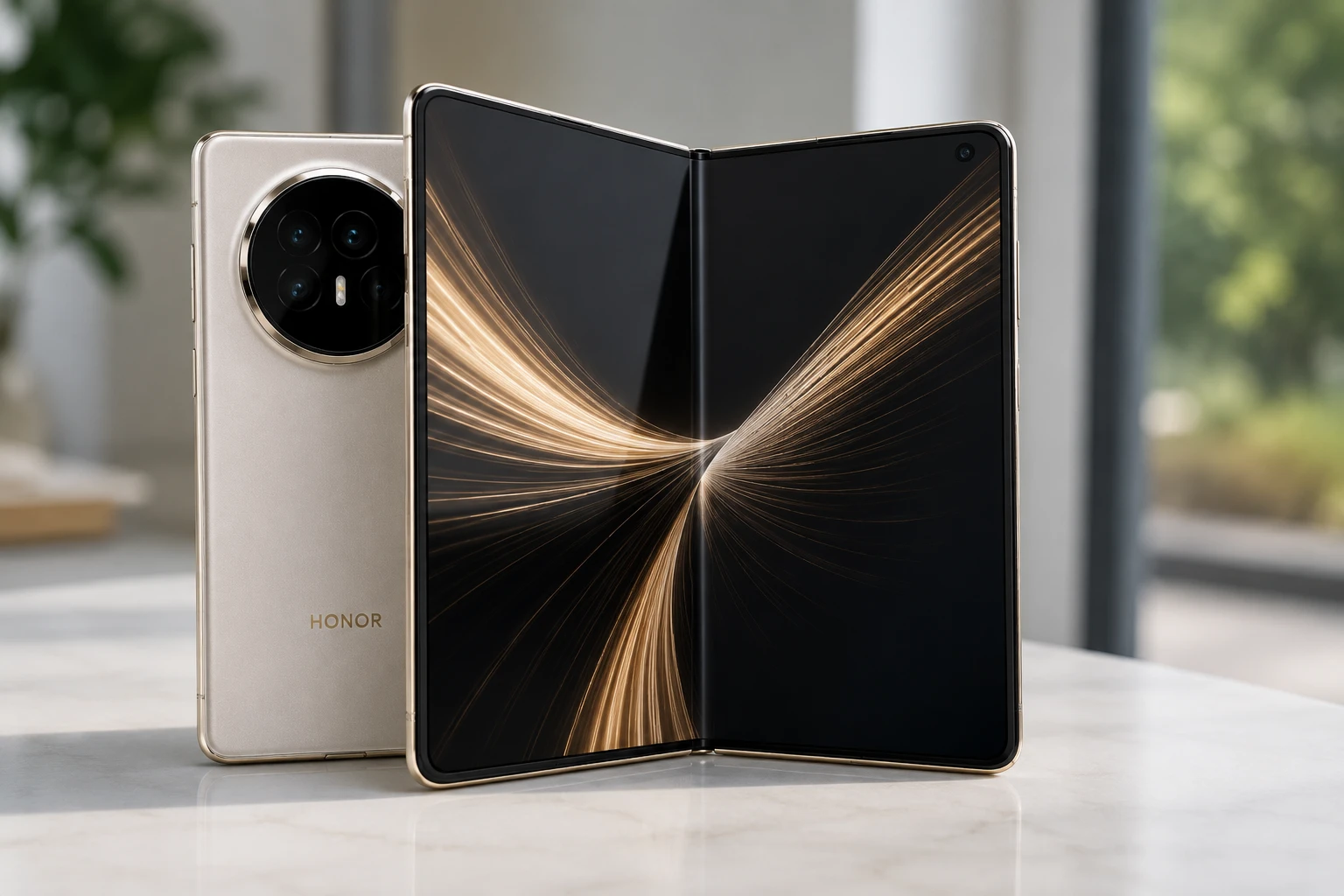
Honor launched the Magic V5 in China on July 2, 2025, at a starting price of RMB 8,999 (roughly $1,246 at current exchange rates for the 12GB/256GB global model), and it has since become available in select Middle East, Asian, and European markets through hihonor.com and authorized retailers. It is not available through US carriers or a US Google Store listing, which matters for warranty and support, but for buyers in eligible regions it represents genuinely compelling value.
The Magic V5 holds the title of world’s thinnest bi-fold smartphone at 8.8mm folded and just 4.1mm unfolded, beating both the Z Fold 7 and Oppo Find N5 on pure thinness. The inner 7.95-inch BOE OLED panel reaches 5,000 nits peak brightness, and both displays carry that same brightness level, which is exceptional for outdoor visibility. Honor achieved IP58 and IP59 ratings for dual ingress protection, certifications that are rare even among non-folding flagships and well ahead of the Z Fold 7’s IP48.
Under the hood, the Snapdragon 8 Elite chip paired with up to 16GB LPDDR5X RAM and UFS 4.0 storage delivers benchmark scores that match the Z Fold 7 directly. The battery configuration is the most unusual on this list: the standard models ship with a 5,820mAh silicon-carbon cell, while the 1TB model gets an upgraded 6,100mAh unit with 25% silicon content, a higher energy density than any current competitor according to Honor’s lab data. All configurations support 66W wired and 50W wireless HONOR SuperCharge.
The camera system uses a triple-lens Honor AI Falcon Camera setup: a 50MP Sony IMX906 f/1.6 main, a 50MP ultrawide, and a 64MP periscope telephoto at 3x optical zoom. Results are solid in good light and competitive with Samsung in telephoto range, though Pixel’s computational processing still edges it out in complex scenes.
The significant caveat is MagicOS 9.0. It is a capable operating system with Gemini integration and an agentic YOYO AI assistant, but foldable-specific app scaling and multitasking gesture polish lag behind both Samsung and Google. If you are buying on software maturity, Honor is the weakest choice here. If you are buying on hardware value, build quality, or thinness, it is the strongest.
Pros and Cons
- Pros: Thinnest and lightest bi-fold at 8.8mm/217g, best value among premium foldables by a wide margin in eligible regions, IP58+IP59 dual ratings beat Samsung, Snapdragon 8 Elite chip, 5,820mAh to 6,100mAh battery, 5,000 nits peak brightness on both displays
- Cons: Not available in the US through official channels, MagicOS lags Samsung and Google on foldable software optimization, limited global warranty and service network, no S Pen or equivalent stylus support
Galaxy Z Fold 7 vs Honor Magic V5: The Real Comparison That Matters in 2026
The comparison everyone is having in 2026 is not the one tech reviewers expected. Most predicted the Pixel 10 Pro Fold would be the Z Fold 7’s primary rival, and in the US market it is. But globally, the Honor Magic V5 has emerged as the more disruptive challenger, delivering Snapdragon 8 Elite performance, a thinner chassis, dual IP ratings, a larger battery, and 5,000 nits peak brightness at roughly $750 less than Samsung’s flagship.
Samsung’s advantages are real but specific. The Z Fold 7’s app ecosystem, multitasking polish from six generations of refinement, the 200MP camera, and carrier availability in the US, UK, and Australia are genuine differentiators that Honor cannot match right now. If you live in North America or Western Europe and rely on carrier support, the Z Fold 7 is the safer long-term investment. If you are in Asia, the Middle East, or a market where Honor is fully supported and you prioritize hardware value per dollar, the Magic V5 wins on almost every hardware spec.
Which Foldable Phone Should You Buy in 2026?
- Best overall: Samsung Galaxy Z Fold 7, for software maturity, camera quality, and global availability
- Best durability: Google Pixel 10 Pro Fold, the only foldable with IP68 and the category’s best computational photography
- Best battery life: Motorola Razr Fold, 6,000mAh with 80W charging and DXOMARK Gold cameras in a first-generation book-fold
- Best value (outside US): Honor Magic V5, thinnest design, dual IP ratings, Snapdragon 8 Elite at a significantly lower price than Samsung
Every phone on this list is genuinely usable as a daily driver without compromise in 2026, which was not true of foldables even two years ago. The only thing left on the horizon that could shake this category before year-end is the widely expected Apple iPhone Fold, but until that ships with verified specs and a real price, what you see above is the best the foldable market has to offer right now.
Frequently Asked Questions
Which is the thinnest foldable phone in 2026?
The Honor Magic V5 is the thinnest bi-fold smartphone currently available, measuring 8.8mm when folded and 4.1mm when fully unfolded. The Samsung Galaxy Z Fold 7 follows at 8.9mm folded and 4.2mm unfolded.
Does the Samsung Galaxy Z Fold 7 support the S Pen?
No. Samsung removed the digitizer layer from the Z Fold 7’s inner display, which means the S Pen is not compatible. If stylus support matters to you, the Motorola Razr Fold supports the Moto Pen Ultra, available separately for $99.
Which foldable phone has the best IP rating in 2026?
The Google Pixel 10 Pro Fold is the only foldable phone with a full IP68 rating, covering both dust and water resistance. The Honor Magic V5 holds IP58 and IP59 dual ratings. The Samsung Galaxy Z Fold 7 and Motorola Razr Fold both carry IP48, which covers water but not dust.
Is the Honor Magic V5 available in the US?
Not officially. The Honor Magic V5 is available through hihonor.com and select retailers in the Middle East, parts of Asia, and some European markets. It is not sold through US carriers or the Google Store, and official US warranty support is not available.
Which foldable has the best battery life in 2026?
The Motorola Razr Fold carries the largest battery in any currently available foldable at 6,000mAh, paired with 80W TurboPower charging. Motorola claims up to 43 hours of use on a single charge. The Honor Magic V5’s 1TB model comes close with a 6,100mAh silicon-carbon battery, though its 66W charging is slower than Motorola’s 80W.
Related Guides
- Best Camera Phones Under Rs 30,000 in India
- Best Phones Under Rs 15,000 in India 2026
- Best AI Photo and Video Editing Apps in 2026
- Best Smartphones to Buy in 2026: Every Budget, Every Need
- Samsung Galaxy S26 Ultra Review (2026): Worth It?
Discover more from iTechnoGlobe
Subscribe to get the latest posts sent to your email.